Skip to content Skip to sidebar Skip to footer

Button Onclick Show Click Again Remove Component React

This tutorial doesn't assume any existing React cognition.

Before We First the Tutorial

We will build a small game during this tutorial. You might be tempted to skip information technology because y'all're not building games — but give it a chance. The techniques you'll learn in the tutorial are cardinal to edifice whatever React app, and mastering it will give you a deep understanding of React.

Tip

This tutorial is designed for people who prefer to acquire by doing. If you prefer learning concepts from the ground up, bank check out our step-by-step guide. You might find this tutorial and the guide complementary to each other.

The tutorial is divided into several sections:

  • Setup for the Tutorial volition requite yous a starting point to follow the tutorial.
  • Overview volition teach you the fundamentals of React: components, props, and state.
  • Completing the Game will teach you the nigh common techniques in React development.
  • Adding Time Travel volition give you a deeper insight into the unique strengths of React.

You don't have to complete all of the sections at once to get the value out of this tutorial. Try to become every bit far as y'all can — even if it'due south one or two sections.

What Are We Building?

In this tutorial, we'll show how to build an interactive tic-tac-toe game with React.

You can see what nosotros'll be edifice hither: Final Outcome. If the lawmaking doesn't make sense to you, or if you lot are unfamiliar with the code's syntax, don't worry! The goal of this tutorial is to help you understand React and its syntax.

We recommend that you check out the tic-tac-toe game earlier standing with the tutorial. One of the features that you'll notice is that in that location is a numbered list to the right of the game's lath. This listing gives you a history of all of the moves that accept occurred in the game, and it is updated as the game progresses.

You can close the tic-tac-toe game once you're familiar with information technology. We'll be starting from a simpler template in this tutorial. Our adjacent footstep is to ready y'all up then that you tin beginning building the game.

Prerequisites

We'll assume that you have some familiarity with HTML and JavaScript, simply you lot should exist able to follow along fifty-fifty if yous're coming from a different programming linguistic communication. We'll also assume that you're familiar with programming concepts like functions, objects, arrays, and to a lesser extent, classes.

If you lot demand to review JavaScript, nosotros recommend reading this guide. Note that we're also using some features from ES6 — a recent version of JavaScript. In this tutorial, we're using arrow functions, classes, let, and const statements. You can use the Boom-boom REPL to check what ES6 lawmaking compiles to.

Setup for the Tutorial

There are two ways to complete this tutorial: you can either write the code in your browser, or you tin set up upward a local development surround on your estimator.

Setup Option 1: Write Code in the Browser

This is the quickest way to get started!

Start, open this Starter Code in a new tab. The new tab should brandish an empty tic-tac-toe game board and React code. We will be editing the React code in this tutorial.

Yous can now skip the second setup option, and go to the Overview department to get an overview of React.

Setup Choice 2: Local Development Environment

This is completely optional and non required for this tutorial!


Optional: Instructions for following along locally using your preferred text editor

This setup requires more piece of work but allows you to complete the tutorial using an editor of your choice. Hither are the steps to follow:

  1. Brand sure y'all have a recent version of Node.js installed.
  2. Follow the installation instructions for Create React App to make a new project.
              npx create-react-app my-app            
  1. Delete all files in the src/ folder of the new project

Note:

Don't delete the entire src folder, just the original source files within it. We'll supercede the default source files with examples for this project in the adjacent step.

                              cd                my-app                cd                src                # If you're using a Mac or Linux:                rm                -f *                # Or, if you're on Windows:                del *                # And so, switch back to the project binder                cd                ..                          
  1. Add a file named index.css in the src/ folder with this CSS lawmaking.
  2. Add a file named index.js in the src/ folder with this JS lawmaking.
  3. Add these three lines to the superlative of index.js in the src/ folder:
                              import                React                from                'react'                ;                import                ReactDOM                from                'react-dom/client'                ;                import                './index.css'                ;                          

Now if you run npm starting time in the projection binder and open up http://localhost:3000 in the browser, you lot should see an empty tic-tac-toe field.

We recommend post-obit these instructions to configure syntax highlighting for your editor.

Help, I'g Stuck!

If you go stuck, check out the customs support resources. In item, Reactiflux Chat is a smashing way to get assistance quickly. If you lot don't receive an answer, or if you remain stuck, please file an issue, and nosotros'll help y'all out.

Overview

Now that you're gear up, let'southward get an overview of React!

What Is React?

React is a declarative, efficient, and flexible JavaScript library for building user interfaces. It lets you compose complex UIs from small and isolated pieces of code called "components".

React has a few different kinds of components, but we'll start with React.Component subclasses:

                          class              ShoppingList              extends              React.Component              {              render              (              )              {              return              (                                                <div                className                                  =                  "shopping-list"                                >                                                                                          <h1                >                            Shopping List for                            {              this              .props.name}                                                </h1                >                                                                                          <ul                >                                                                                          <li                >                            Instagram                                                </li                >                                                                                          <li                >                            WhatsApp                                                </li                >                                                                                          <li                >                            Oculus                                                </li                >                                                                                          </ul                >                                                                                          </div                >                            )              ;              }              }              // Example usage: <ShoppingList name="Mark" />                      

We'll get to the funny XML-like tags soon. We use components to tell React what nosotros desire to see on the screen. When our data changes, React will efficiently update and re-render our components.

Here, ShoppingList is a React component class, or React component type. A component takes in parameters, called props (short for "backdrop"), and returns a hierarchy of views to display via the render method.

The render method returns a description of what yous want to run into on the screen. React takes the clarification and displays the outcome. In particular, return returns a React element, which is a lightweight description of what to render. Virtually React developers employ a special syntax called "JSX" which makes these structures easier to write. The <div /> syntax is transformed at build time to React.createElement('div'). The example above is equivalent to:

                          render              React.              createElement              (              'div'              ,              {              className              :              'shopping-list'              }              ,              React.              createElement              (              'h1'              ,              /* ... h1 children ... */              )              ,              React.              createElement              (              'ul'              ,              /* ... ul children ... */              )              )              ;                      

See full expanded version.

If you're curious, createElement() is described in more particular in the API reference, but we won't be using information technology in this tutorial. Instead, we will keep using JSX.

JSX comes with the full power of JavaScript. You can put whatever JavaScript expressions within braces within JSX. Each React element is a JavaScript object that you can store in a variable or pass around in your plan.

The ShoppingList component above only renders built-in DOM components similar <div /> and <li />. But you can etch and return custom React components too. For instance, we can now refer to the whole shopping list by writing <ShoppingList />. Each React component is encapsulated and tin operate independently; this allows y'all to build complex UIs from uncomplicated components.

Inspecting the Starter Code

If you're going to piece of work on the tutorial in your browser, open this code in a new tab: Starter Lawmaking. If you're going to work on the tutorial locally, instead open src/index.js in your project folder (yous take already touched this file during the setup).

This Starter Lawmaking is the base of operations of what we're building. We've provided the CSS styling and so that yous only need to focus on learning React and programming the tic-tac-toe game.

Past inspecting the code, you'll notice that we accept three React components:

  • Square
  • Lath
  • Game

The Foursquare component renders a unmarried <push> and the Board renders 9 squares. The Game component renders a board with placeholder values which we'll modify later. There are currently no interactive components.

Passing Data Through Props

To get our anxiety wet, permit's try passing some data from our Board component to our Square component.

Nosotros strongly recommend typing code by hand as you're working through the tutorial and not using re-create/paste. This will assistance yous develop muscle retentiveness and a stronger understanding.

In Lath's renderSquare method, change the code to laissez passer a prop called value to the Foursquare:

                          class              Lath              extends              React.Component              {              renderSquare              (              i              )              {                              return                                                      <                    Square                                    value                                      =                    {i}                                    />                                ;                            }              }                      

Change Square's render method to show that value by replacing {/* TODO */} with {this.props.value}:

                          class              Square              extends              React.Component              {              render              (              )              {              return              (                                                <button                className                                  =                  "square"                                >                                                                                          {                this                .props.value}                                                                                                          </button                >                            )              ;              }              }                      

Before:
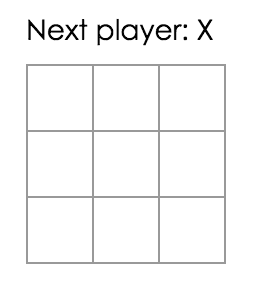
React Devtools

After: You should see a number in each foursquare in the rendered output.
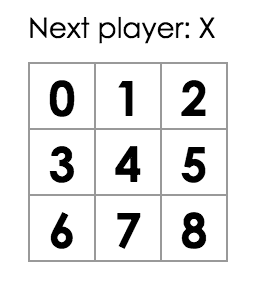
React Devtools

View the full lawmaking at this point

Congratulations! You lot've simply "passed a prop" from a parent Board component to a kid Foursquare component. Passing props is how information flows in React apps, from parents to children.

Making an Interactive Component

Let'due south fill the Foursquare component with an "X" when we click it. Start, change the button tag that is returned from the Square component'due south render() function to this:

                          class              Square              extends              React.Component              {              return              (              )              {              return              (                                                                    <push button                  className                                      =                    "square"                                    onClick                                      =                    {                    function                    (                    )                    {                    console.                    log                    (                    'click'                    )                    ;                    }                    }                                    >                                                                                        {              this              .props.value}                                                                                          </button                >                            )              ;              }              }                      

If you lot click on a Square now, you should see 'click' in your browser's devtools console.

Note

To save typing and avoid the disruptive behavior of this, we will use the pointer function syntax for event handlers here and farther below:

                              course                Square                extends                React.Component                {                render                (                )                {                return                (                                                                            <push                    className                                          =                      "square"                                        onClick                                          =                      {                      (                      )                      =>                      console.                      log                      (                      'click'                      )                      }                                        >                                                                                                    {                this                .props.value}                                                                                                      </button                  >                                )                ;                }                }                          

Find how with onClick={() => panel.log('click')}, we're passing a function as the onClick prop. React will but call this function after a click. Forgetting () => and writing onClick={panel.log('click')} is a common fault, and would fire every fourth dimension the component re-renders.

As a next pace, we want the Foursquare component to "remember" that information technology got clicked, and fill it with an "X" marker. To "remember" things, components utilise state.

React components can have state by setting this.land in their constructors. this.state should be considered as private to a React component that it's defined in. Let's store the current value of the Foursquare in this.state, and change it when the Square is clicked.

Showtime, we'll add a constructor to the class to initialize the state:

                          class              Square              extends              React.Component              {                              constructor                (                props                )                {                                            super                (props)                ;                                            this                .state                =                {                                            value                :                null                ,                                            }                ;                                            }                            render              (              )              {              render              (                                                <button                className                                  =                  "square"                                onClick                                  =                  {                  (                  )                  =>                  console.                  log                  (                  'click'                  )                  }                                >                                                                      {              this              .props.value}                                                                                          </button                >                            )              ;              }              }                      

Annotation

In JavaScript classes, you need to always telephone call super when defining the constructor of a bracket. All React component classes that have a constructor should offset with a super(props) call.

Now we'll modify the Square'southward return method to display the current state'south value when clicked:

  • Replace this.props.value with this.state.value within the <push> tag.
  • Supplant the onClick={...} issue handler with onClick={() => this.setState({value: '10'})}.
  • Put the className and onClick props on separate lines for amend readability.

Subsequently these changes, the <push> tag that is returned by the Foursquare's render method looks similar this:

                          class              Square              extends              React.Component              {              constructor              (              props              )              {              super              (props)              ;              this              .land              =              {              value              :              nothing              ,              }              ;              }              render              (              )              {              return              (                                                <button                                  className                                      =                    "square"                                                                    onClick                                      =                    {                    (                    )                    =>                    this                    .                    setState                    (                    {                    value                    :                    'X'                    }                    )                    }                                                  >                                                                                          {                this                .land.value}                                                                                                          </button                >                            )              ;              }              }                      

By calling this.setState from an onClick handler in the Square's render method, we tell React to re-render that Square whenever its <push button> is clicked. Afterwards the update, the Square'south this.country.value will be '10', then we'll see the 10 on the game board. If you click on any Square, an 10 should show up.

When you call setState in a component, React automatically updates the child components within of it besides.

View the full code at this signal

Developer Tools

The React Devtools extension for Chrome and Firefox lets you inspect a React component tree with your browser's programmer tools.
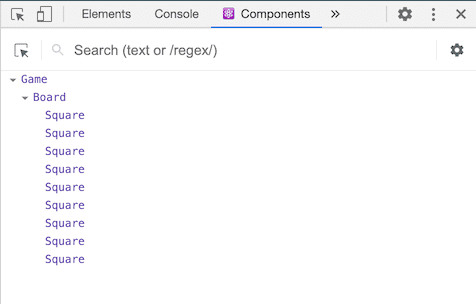
React Devtools

The React DevTools let you check the props and the state of your React components.

After installing React DevTools, you can right-click on any element on the page, click "Inspect" to open up the developer tools, and the React tabs ("⚛️ Components" and "⚛️ Profiler") volition appear every bit the last tabs to the correct. Use "⚛️ Components" to audit the component tree.

However, note in that location are a few extra steps to go it working with CodePen:

  1. Log in or register and confirm your email (required to prevent spam).
  2. Click the "Fork" button.
  3. Click "Alter View" and and then choose "Debug mode".
  4. In the new tab that opens, the devtools should at present have a React tab.

Completing the Game

We now have the basic building blocks for our tic-tac-toe game. To accept a complete game, we at present demand to alternate placing "X"s and "O"south on the board, and we demand a mode to determine a winner.

Lifting State Up

Currently, each Foursquare component maintains the game'southward country. To cheque for a winner, we'll maintain the value of each of the 9 squares in one location.

We may think that Board should just ask each Square for the Foursquare'due south state. Although this approach is possible in React, nosotros discourage it considering the lawmaking becomes difficult to understand, susceptible to bugs, and hard to refactor. Instead, the best arroyo is to store the game's state in the parent Board component instead of in each Square. The Board component tin tell each Square what to display by passing a prop, just similar nosotros did when we passed a number to each Foursquare.

To collect data from multiple children, or to have two child components communicate with each other, y'all need to declare the shared land in their parent component instead. The parent component can pass the state dorsum down to the children by using props; this keeps the child components in sync with each other and with the parent component.

Lifting state into a parent component is common when React components are refactored — allow's have this opportunity to endeavour information technology out.

Add a constructor to the Board and set the Lath's initial land to contain an assortment of ix nulls corresponding to the nine squares:

                          course              Board              extends              React.Component              {                              constructor                (                props                )                {                                            super                (props)                ;                                            this                .state                =                {                                            squares                :                Array                (                9                )                .                fill                (                null                )                ,                                            }                ;                                            }                            renderSquare              (              i              )              {              return                                                <                  Foursquare                                value                                  =                  {i}                                />                            ;              }                      

When we fill the lath in after, the this.state.squares array will look something like this:

                          [              'O'              ,              null              ,              'X'              ,              'X'              ,              '10'              ,              'O'              ,              'O'              ,              cypher              ,              zilch              ,              ]                      

The Board's renderSquare method currently looks similar this:

                          renderSquare              (              i              )              {              return                                                <                  Square                                value                                  =                  {i}                                />                            ;              }                      

In the beginning, we passed the value prop down from the Lath to bear witness numbers from 0 to viii in every Square. In a different previous footstep, we replaced the numbers with an "X" marker adamant past Foursquare's own state. This is why Foursquare currently ignores the value prop passed to information technology by the Board.

We will now use the prop passing mechanism once again. Nosotros will alter the Board to instruct each individual Square virtually its current value ('X', 'O', or nil). We have already defined the squares array in the Lath's constructor, and we will change the Board's renderSquare method to read from it:

                          renderSquare              (              i              )              {                              render                                                      <                    Foursquare                                    value                                      =                    {                    this                    .land.squares[i]                    }                                    />                                ;                            }                      

View the full lawmaking at this betoken

Each Foursquare will at present receive a value prop that volition either be 'X', 'O', or cypher for empty squares.

Side by side, nosotros demand to alter what happens when a Foursquare is clicked. The Board component now maintains which squares are filled. We need to create a way for the Foursquare to update the Lath's land. Since state is considered to exist private to a component that defines information technology, we cannot update the Lath'south state directly from Square.

Instead, we'll pass down a function from the Board to the Square, and we'll have Square call that function when a foursquare is clicked. Nosotros'll change the renderSquare method in Lath to:

                          renderSquare              (              i              )              {              return              (                                                <                  Square                                value                                  =                  {                  this                  .state.squares[i]                  }                                                  onClick                                      =                    {                    (                    )                    =>                    this                    .                    handleClick                    (i)                    }                                                  />                            )              ;              }                      

Note

We split the returned element into multiple lines for readability, and added parentheses so that JavaScript doesn't insert a semicolon after return and break our code.

At present we're passing down two props from Board to Square: value and onClick. The onClick prop is a part that Foursquare can call when clicked. We'll make the following changes to Foursquare:

  • Supplant this.state.value with this.props.value in Square's render method
  • Supervene upon this.setState() with this.props.onClick() in Foursquare'due south return method
  • Delete the constructor from Foursquare because Square no longer keeps track of the game's state

After these changes, the Square component looks like this:

                                          grade                Square                extends                React.Component                {                                            render                (                )                {                            return              (                                                <push button                className                                  =                  "square"                                                  onClick                                      =                    {                    (                    )                    =>                    this                    .props.                    onClick                    (                    )                    }                                                  >                                                                                          {                this                .props.value}                                                                                                          </button                >                            )              ;              }              }                      

When a Square is clicked, the onClick function provided by the Board is chosen. Here'southward a review of how this is accomplished:

  1. The onClick prop on the built-in DOM <push> component tells React to ready a click upshot listener.
  2. When the push is clicked, React will call the onClick event handler that is defined in Square's return() method.
  3. This issue handler calls this.props.onClick(). The Square's onClick prop was specified by the Board.
  4. Since the Board passed onClick={() => this.handleClick(i)} to Foursquare, the Square calls the Board's handleClick(i) when clicked.
  5. Nosotros take non defined the handleClick() method still, so our code crashes. If you click a square now, y'all should see a ruby-red error screen saying something like "this.handleClick is not a function".

Notation

The DOM <button> element's onClick attribute has a special pregnant to React because information technology is a built-in component. For custom components similar Square, the naming is up to yous. We could give whatever proper noun to the Square'south onClick prop or Board's handleClick method, and the code would work the same. In React, information technology'southward conventional to employ on[Event] names for props which represent events and handle[Consequence] for the methods which handle the events.

When nosotros try to click a Foursquare, nosotros should get an error because nosotros haven't defined handleClick even so. Nosotros'll at present add handleClick to the Board class:

                          form              Lath              extends              React.Component              {              constructor              (              props              )              {              super              (props)              ;              this              .state              =              {              squares              :              Array              (              9              )              .              fill up              (              null              )              ,              }              ;              }                              handleClick                (                i                )                {                                            const                squares                =                this                .state.squares.                slice                (                )                ;                                            squares[i]                =                '10'                ;                                            this                .                setState                (                {                squares                :                squares}                )                ;                                            }                            renderSquare              (              i              )              {              render              (                                                <                  Square                                value                                  =                  {                  this                  .state.squares[i]                  }                                onClick                                  =                  {                  (                  )                  =>                  this                  .                  handleClick                  (i)                  }                                />                            )              ;              }              render              (              )              {              const              status              =              'Next player: Ten'              ;              render              (                                                <div                >                                                                                                        <div                className                                  =                  "status"                                >                            {status}                                                </div                >                                                                                                        <div                className                                  =                  "board-row"                                >                                                                      {              this              .              renderSquare              (              0              )              }                                                        {              this              .              renderSquare              (              1              )              }                                                        {              this              .              renderSquare              (              2              )              }                                                                                          </div                >                                                                                                        <div                className                                  =                  "board-row"                                >                                                                      {              this              .              renderSquare              (              iii              )              }                                                        {              this              .              renderSquare              (              four              )              }                                                        {              this              .              renderSquare              (              5              )              }                                                                                          </div                >                                                                                                        <div                className                                  =                  "board-row"                                >                                                                      {              this              .              renderSquare              (              vi              )              }                                                        {              this              .              renderSquare              (              7              )              }                                                        {              this              .              renderSquare              (              8              )              }                                                                                          </div                >                                                                                                        </div                >                            )              ;              }              }                      

View the full lawmaking at this point

After these changes, we're again able to click on the Squares to fill them, the aforementioned as nosotros had before. However, at present the state is stored in the Lath component instead of the individual Foursquare components. When the Board's state changes, the Square components re-render automatically. Keeping the state of all squares in the Board component will permit it to determine the winner in the future.

Since the Square components no longer maintain country, the Foursquare components receive values from the Board component and inform the Lath component when they're clicked. In React terms, the Square components are now controlled components. The Board has full control over them.

Note how in handleClick, nosotros call .slice() to create a copy of the squares array to change instead of modifying the existing assortment. We volition explain why nosotros create a re-create of the squares array in the next section.

Why Immutability Is Of import

In the previous code example, nosotros suggested that you create a copy of the squares array using the slice() method instead of modifying the existing assortment. We'll now discuss immutability and why immutability is of import to larn.

There are generally two approaches to changing data. The offset approach is to mutate the data by direct changing the data'south values. The second approach is to supplant the data with a new copy which has the desired changes.

Data Change with Mutation

                          var              player              =              {              score              :              1              ,              name              :              'Jeff'              }              ;              histrion.score              =              2              ;              // Now player is {score: 2, name: 'Jeff'}                      

Data Change without Mutation

                          var              actor              =              {              score              :              1              ,              name              :              'Jeff'              }              ;              var              newPlayer              =              Object.              assign              (              {              }              ,              player,              {              score              :              two              }              )              ;              // Now thespian is unchanged, but newPlayer is {score: ii, proper name: 'Jeff'}              // Or if you lot are using object spread syntax proposal, you lot tin can write:              // var newPlayer = {...player, score: 2};                      

The end result is the aforementioned only past not mutating (or changing the underlying data) directly, we gain several benefits described beneath.

Complex Features Become Simple

Immutability makes complex features much easier to implement. Later in this tutorial, we will implement a "time travel" feature that allows us to review the tic-tac-toe game's history and "spring dorsum" to previous moves. This functionality isn't specific to games — an ability to disengage and redo certain actions is a mutual requirement in applications. Fugitive direct data mutation lets usa keep previous versions of the game's history intact, and reuse them later on.

Detecting Changes

Detecting changes in mutable objects is difficult because they are modified directly. This detection requires the mutable object to exist compared to previous copies of itself and the unabridged object tree to be traversed.

Detecting changes in immutable objects is considerably easier. If the immutable object that is beingness referenced is different than the previous one, and so the object has changed.

Determining When to Re-Render in React

The main benefit of immutability is that it helps you build pure components in React. Immutable data tin can easily decide if changes have been made, which helps to determine when a component requires re-rendering.

You can learn more about shouldComponentUpdate() and how you lot can build pure components by reading Optimizing Functioning.

Function Components

We'll at present change the Square to be a function component.

In React, office components are a simpler way to write components that only contain a render method and don't have their own state. Instead of defining a grade which extends React.Component, we can write a function that takes props as input and returns what should be rendered. Function components are less tedious to write than classes, and many components tin exist expressed this style.

Supervene upon the Square class with this office:

                          office              Square              (              props              )              {              return              (                                                <push                className                                  =                  "square"                                onClick                                  =                  {props.onClick}                                >                                                        {props.value}                                                                            </button                >                            )              ;              }                      

Nosotros have changed this.props to props both times it appears.

View the full code at this point

Note

When nosotros modified the Foursquare to exist a function component, nosotros besides changed onClick={() => this.props.onClick()} to a shorter onClick={props.onClick} (annotation the lack of parentheses on both sides).

Taking Turns

We now need to fix an obvious defect in our tic-tac-toe game: the "O"s cannot exist marked on the lath.

We'll set up the commencement move to be "X" by default. Nosotros can set this default by modifying the initial state in our Board constructor:

                          class              Board              extends              React.Component              {              constructor              (              props              )              {              super              (props)              ;              this              .state              =              {              squares              :              Array              (              9              )              .              fill              (              nothing              )              ,                              xIsNext                :                truthful                ,                            }              ;              }                      

Each time a actor moves, xIsNext (a boolean) will be flipped to decide which actor goes adjacent and the game's state will exist saved. We'll update the Lath'south handleClick function to flip the value of xIsNext:

                          handleClick              (              i              )              {              const              squares              =              this              .state.squares.              piece              (              )              ;                              squares[i]                =                this                .country.xIsNext                ?                '10'                :                'O'                ;                            this              .              setState              (              {              squares              :              squares,                              xIsNext                :                !                this                .land.xIsNext,                            }              )              ;              }                      

With this change, "X"due south and "O"s can accept turns. Endeavour it!

Let's too modify the "status" text in Board's return so that it displays which histrion has the next turn:

                          return              (              )              {                              const                status                =                'Next player: '                +                (                this                .country.xIsNext                ?                'Ten'                :                'O'                )                ;                            render              (              // the rest has non changed                      

Later applying these changes, you lot should accept this Board component:

                          class              Board              extends              React.Component              {              constructor              (              props              )              {              super              (props)              ;              this              .state              =              {              squares              :              Assortment              (              9              )              .              fill              (              cipher              )              ,                              xIsNext                :                true                ,                            }              ;              }              handleClick              (              i              )              {                              const                squares                =                this                .land.squares.                piece                (                )                ;                                            squares[i]                =                this                .country.xIsNext                ?                '10'                :                'O'                ;                                            this                .                setState                (                {                                            squares                :                squares,                                            xIsNext                :                !                this                .state.xIsNext,                                            }                )                ;                            }              renderSquare              (              i              )              {              return              (                                                <                  Square                                value                                  =                  {                  this                  .land.squares[i]                  }                                onClick                                  =                  {                  (                  )                  =>                  this                  .                  handleClick                  (i)                  }                                />                            )              ;              }              render              (              )              {                              const                status                =                'Side by side player: '                +                (                this                .state.xIsNext                ?                'X'                :                'O'                )                ;                            return              (                                                <div                >                                                                                                        <div                className                                  =                  "condition"                                >                            {status}                                                </div                >                                                                                                        <div                className                                  =                  "board-row"                                >                                                                      {              this              .              renderSquare              (              0              )              }                                                        {              this              .              renderSquare              (              i              )              }                                                        {              this              .              renderSquare              (              two              )              }                                                                                          </div                >                                                                                                        <div                className                                  =                  "lath-row"                                >                                                                      {              this              .              renderSquare              (              3              )              }                                                        {              this              .              renderSquare              (              4              )              }                                                        {              this              .              renderSquare              (              five              )              }                                                                                          </div                >                                                                                                        <div                className                                  =                  "board-row"                                >                                                                      {              this              .              renderSquare              (              6              )              }                                                        {              this              .              renderSquare              (              vii              )              }                                                        {              this              .              renderSquare              (              8              )              }                                                                                          </div                >                                                                                                        </div                >                            )              ;              }              }                      

View the total code at this point

Declaring a Winner

Now that nosotros evidence which role player's plow is next, we should also show when the game is won and there are no more turns to make. Copy this helper function and paste it at the end of the file:

                          office              calculateWinner              (              squares              )              {              const              lines              =              [              [              0              ,              i              ,              two              ]              ,              [              3              ,              4              ,              five              ]              ,              [              6              ,              7              ,              eight              ]              ,              [              0              ,              3              ,              6              ]              ,              [              i              ,              4              ,              seven              ]              ,              [              2              ,              5              ,              8              ]              ,              [              0              ,              4              ,              8              ]              ,              [              ii              ,              4              ,              half-dozen              ]              ,              ]              ;              for              (              let              i              =              0              ;              i              <              lines.length;              i++              )              {              const              [a,              b,              c]              =              lines[i]              ;              if              (squares[a]              &&              squares[a]              ===              squares[b]              &&              squares[a]              ===              squares[c]              )              {              return              squares[a]              ;              }              }              return              cipher              ;              }                      

Given an assortment of 9 squares, this function will bank check for a winner and return '10', 'O', or null as advisable.

We will call calculateWinner(squares) in the Board'due south render part to cheque if a player has won. If a actor has won, we can display text such equally "Winner: X" or "Winner: O". We'll replace the status declaration in Lath's return function with this lawmaking:

                          render              (              )              {                              const                winner                =                calculateWinner                (                this                .state.squares)                ;                                            let                status;                                            if                (winner)                {                                            condition                =                'Winner: '                +                winner;                                            }                else                {                                            status                =                'Next role player: '                +                (                this                .state.xIsNext                ?                'X'                :                'O'                )                ;                                            }                            return              (              // the rest has not inverse                      

Nosotros tin can now change the Lath's handleClick function to return early by ignoring a click if someone has won the game or if a Square is already filled:

                          handleClick              (              i              )              {              const              squares              =              this              .state.squares.              slice              (              )              ;                              if                (                calculateWinner                (squares)                ||                squares[i]                )                {                                            render                ;                                            }                            squares[i]              =              this              .land.xIsNext              ?              'X'              :              'O'              ;              this              .              setState              (              {              squares              :              squares,              xIsNext              :              !              this              .country.xIsNext,              }              )              ;              }                      

View the full code at this point

Congratulations! You now have a working tic-tac-toe game. And you've only learned the basics of React too. So you're probably the real winner hither.

Calculation Fourth dimension Travel

As a terminal exercise, permit'south go far possible to "go back in time" to the previous moves in the game.

Storing a History of Moves

If we mutated the squares array, implementing time travel would be very difficult.

However, we used slice() to create a new re-create of the squares array after every move, and treated it as immutable. This will allow united states to store every by version of the squares array, and navigate between the turns that take already happened.

We'll store the past squares arrays in another array called history. The history array represents all lath states, from the starting time to the last move, and has a shape like this:

            history              =              [              // Before first move              {              squares              :              [              null              ,              nix              ,              zip              ,              naught              ,              null              ,              null              ,              zilch              ,              nil              ,              null              ,              ]              }              ,              // After first motion              {              squares              :              [              goose egg              ,              zip              ,              nix              ,              null              ,              'X'              ,              null              ,              nix              ,              null              ,              null              ,              ]              }              ,              // After 2d movement              {              squares              :              [              zilch              ,              zilch              ,              nada              ,              null              ,              'X'              ,              null              ,              nil              ,              naught              ,              'O'              ,              ]              }              ,              // ...              ]                      

Now we need to decide which component should own the history land.

Lifting State Upwards, Again

Nosotros'll desire the pinnacle-level Game component to brandish a list of past moves. Information technology volition need access to the history to practice that, so nosotros will identify the history state in the top-level Game component.

Placing the history state into the Game component lets united states of america remove the squares state from its child Board component. Just like nosotros "lifted state up" from the Foursquare component into the Board component, nosotros are now lifting it upward from the Lath into the summit-level Game component. This gives the Game component total control over the Board's data, and lets it instruct the Board to return previous turns from the history.

First, nosotros'll ready the initial country for the Game component within its constructor:

                          class              Game              extends              React.Component              {                              constructor                (                props                )                {                                            super                (props)                ;                                            this                .land                =                {                                            history                :                [                {                                            squares                :                Array                (                9                )                .                make full                (                zip                )                ,                                            }                ]                ,                                            xIsNext                :                truthful                ,                                            }                ;                                            }                            render              (              )              {              return              (                                                <div                className                                  =                  "game"                                >                                                                                                        <div                className                                  =                  "game-board"                                >                                                                                                        <                  Board                                />                                                                                                        </div                >                                                                                                        <div                className                                  =                  "game-info"                                >                                                                                                        <div                >                            {              /* status */              }                                                </div                >                                                                                                        <ol                >                            {              /* TODO */              }                                                </ol                >                                                                                                        </div                >                                                                                                        </div                >                            )              ;              }              }                      

Next, we'll accept the Board component receive squares and onClick props from the Game component. Since we now accept a single click handler in Lath for many Squares, we'll need to laissez passer the location of each Square into the onClick handler to indicate which Square was clicked. Here are the required steps to transform the Board component:

  • Delete the constructor in Board.
  • Replace this.state.squares[i] with this.props.squares[i] in Board's renderSquare.
  • Supercede this.handleClick(i) with this.props.onClick(i) in Board'south renderSquare.

The Board component at present looks like this:

                          class              Board              extends              React.Component              {              handleClick              (              i              )              {              const              squares              =              this              .country.squares.              slice              (              )              ;              if              (              calculateWinner              (squares)              ||              squares[i]              )              {              return              ;              }              squares[i]              =              this              .state.xIsNext              ?              'X'              :              'O'              ;              this              .              setState              (              {              squares              :              squares,              xIsNext              :              !              this              .state.xIsNext,              }              )              ;              }              renderSquare              (              i              )              {              render              (                                                <                  Square                                                  value                                      =                    {                    this                    .props.squares[i]                    }                                                                    onClick                                      =                    {                    (                    )                    =>                    this                    .props.                    onClick                    (i)                    }                                                  />                            )              ;              }              render              (              )              {              const              winner              =              calculateWinner              (              this              .state.squares)              ;              let              status;              if              (winner)              {              status              =              'Winner: '              +              winner;              }              else              {              status              =              'Next player: '              +              (              this              .country.xIsNext              ?              'X'              :              'O'              )              ;              }              return              (                                                <div                >                                                                                                        <div                className                                  =                  "status"                                >                            {status}                                                </div                >                                                                                                        <div                className                                  =                  "board-row"                                >                                                                      {              this              .              renderSquare              (              0              )              }                                                        {              this              .              renderSquare              (              ane              )              }                                                        {              this              .              renderSquare              (              2              )              }                                                                                          </div                >                                                                                                        <div                className                                  =                  "board-row"                                >                                                                      {              this              .              renderSquare              (              3              )              }                                                        {              this              .              renderSquare              (              four              )              }                                                        {              this              .              renderSquare              (              v              )              }                                                                                          </div                >                                                                                                        <div                className                                  =                  "board-row"                                >                                                                      {              this              .              renderSquare              (              half dozen              )              }                                                        {              this              .              renderSquare              (              7              )              }                                                        {              this              .              renderSquare              (              8              )              }                                                                                          </div                >                                                                                                        </div                >                            )              ;              }              }                      

We'll update the Game component's return function to use the most recent history entry to determine and display the game's status:

                          render              (              )              {                              const                history                =                this                .land.history;                                            const                current                =                history[history.length                -                ane                ]                ;                                            const                winner                =                calculateWinner                (current.squares)                ;                                                          let                status;                                            if                (winner)                {                                            status                =                'Winner: '                +                winner;                                            }                else                {                                            status                =                'Next player: '                +                (                this                .country.xIsNext                ?                'X'                :                'O'                )                ;                                            }                            return              (                                                <div                className                                  =                  "game"                                >                                                                                                        <div                className                                  =                  "game-lath"                                >                                                                                                                                <                    Lath                                                                    squares                                      =                    {current.squares}                                                                    onClick                                      =                    {                    (                    i                    )                    =>                    this                    .                    handleClick                    (i)                    }                                                                    />                                                                                                                          </div                >                                                                                                        <div                className                                  =                  "game-info"                                >                                                                                                                                <div                  >                                {condition}                                                      </div                  >                                                                                                                          <ol                >                            {              /* TODO */              }                                                </ol                >                                                                                                        </div                >                                                                                                        </div                >                            )              ;              }                      

Since the Game component is now rendering the game'south status, nosotros tin remove the corresponding code from the Board's render method. After refactoring, the Board's return part looks similar this:

                                          render                (                )                {                                            render                (                                                                                  <div                  >                                                                                                                                                  <div                  className                                      =                    "board-row"                                    >                                                                                        {              this              .              renderSquare              (              0              )              }                                                        {              this              .              renderSquare              (              i              )              }                                                        {              this              .              renderSquare              (              2              )              }                                                                                          </div                >                                                                                                        <div                className                                  =                  "board-row"                                >                                                                      {              this              .              renderSquare              (              three              )              }                                                        {              this              .              renderSquare              (              4              )              }                                                        {              this              .              renderSquare              (              v              )              }                                                                                          </div                >                                                                                                        <div                className                                  =                  "lath-row"                                >                                                                      {              this              .              renderSquare              (              vi              )              }                                                        {              this              .              renderSquare              (              7              )              }                                                        {              this              .              renderSquare              (              viii              )              }                                                                                          </div                >                                                                                                        </div                >                            )              ;              }                      

Finally, nosotros need to move the handleClick method from the Lath component to the Game component. We also need to modify handleClick considering the Game component's state is structured differently. Inside the Game'southward handleClick method, we concatenate new history entries onto history.

                          handleClick              (              i              )              {                              const                history                =                this                .state.history;                                            const                electric current                =                history[history.length                -                i                ]                ;                                            const                squares                =                current.squares.                slice                (                )                ;                            if              (              calculateWinner              (squares)              ||              squares[i]              )              {              return              ;              }              squares[i]              =              this              .country.xIsNext              ?              '10'              :              'O'              ;              this              .              setState              (              {                              history                :                history.                concat                (                [                {                                            squares                :                squares,                                            }                ]                )                ,                            xIsNext              :              !              this              .state.xIsNext,              }              )              ;              }                      

Annotation

Dissimilar the assortment push() method you lot might exist more familiar with, the concat() method doesn't mutate the original assortment, so we adopt it.

At this bespeak, the Board component simply needs the renderSquare and render methods. The game's state and the handleClick method should exist in the Game component.

View the total code at this point

Showing the Past Moves

Since we are recording the tic-tac-toe game's history, we tin now brandish information technology to the player equally a list of past moves.

We learned earlier that React elements are beginning-class JavaScript objects; nosotros can laissez passer them around in our applications. To render multiple items in React, we can utilise an array of React elements.

In JavaScript, arrays accept a map() method that is commonly used for mapping data to other data, for example:

                          const              numbers              =              [              1              ,              ii              ,              3              ]              ;              const              doubled              =              numbers.              map              (              x              =>              x              *              2              )              ;              // [two, 4, 6]                      

Using the map method, we tin can map our history of moves to React elements representing buttons on the screen, and display a list of buttons to "jump" to past moves.

Let's map over the history in the Game'due south render method:

                          return              (              )              {              const              history              =              this              .land.history;              const              current              =              history[history.length              -              1              ]              ;              const              winner              =              calculateWinner              (current.squares)              ;                              const                moves                =                history.                map                (                (                step,                  move                )                =>                {                                            const                desc                =                move                ?                                            'Go to move #'                +                move                :                                            'Become to game start'                ;                                            return                (                                                                                  <li                  >                                                                                                                                                  <button                  onClick                                      =                    {                    (                    )                    =>                    this                    .                    jumpTo                    (motion)                    }                                    >                                {desc}                                                      </button                  >                                                                                                                                                  </li                  >                                                            )                ;                                            }                )                ;                            let              status;              if              (winner)              {              condition              =              'Winner: '              +              winner;              }              else              {              status              =              'Next player: '              +              (              this              .land.xIsNext              ?              'X'              :              'O'              )              ;              }              return              (                                                <div                className                                  =                  "game"                                >                                                                                                        <div                className                                  =                  "game-board"                                >                                                                                                        <                  Board                                squares                                  =                  {electric current.squares}                                onClick                                  =                  {                  (                  i                  )                  =>                  this                  .                  handleClick                  (i)                  }                                />                                                                                                        </div                >                                                                                                        <div                className                                  =                  "game-info"                                >                                                                                                        <div                >                            {status}                                                </div                >                                                                                                                                <ol                  >                                {moves}                                                      </ol                  >                                                                                                                          </div                >                                                                                                        </div                >                            )              ;              }                      

View the total code at this point

As we iterate through history array, pace variable refers to the electric current history element value, and motion refers to the electric current history element index. We are but interested in motility here, hence step is non getting assigned to anything.

For each motion in the tic-tac-toe game's history, we create a list detail <li> which contains a button <button>. The button has a onClick handler which calls a method chosen this.jumpTo(). We haven't implemented the jumpTo() method even so. For at present, we should see a list of the moves that have occurred in the game and a warning in the developer tools panel that says:

Warning: Each child in an array or iterator should have a unique "key" prop. Cheque the render method of "Game".

Let's discuss what the to a higher place warning ways.

Picking a Fundamental

When nosotros return a listing, React stores some information about each rendered list item. When we update a list, React needs to determine what has inverse. We could have added, removed, re-arranged, or updated the list's items.

Imagine transitioning from

                                                            <li                >              Alexa: 7 tasks left                                  </li                >                                                              <li                >              Ben: 5 tasks left                                  </li                >                                    

to

                                                            <li                >              Ben: 9 tasks left                                  </li                >                                                              <li                >              Claudia: 8 tasks left                                  </li                >                                                              <li                >              Alexa: 5 tasks left                                  </li                >                                    

In improver to the updated counts, a human reading this would probably say that nosotros swapped Alexa and Ben's ordering and inserted Claudia between Alexa and Ben. However, React is a computer program and does not know what we intended. Because React cannot know our intentions, we need to specify a key property for each list item to differentiate each list particular from its siblings. I option would be to use the strings alexa, ben, claudia. If nosotros were displaying information from a database, Alexa, Ben, and Claudia'southward database IDs could be used as keys.

                                                            <li                central                                  ={user.id}                >              {user.proper name}: {user.taskCount} tasks left                                  </li                >                                    

When a list is re-rendered, React takes each list item's central and searches the previous listing's items for a matching key. If the current list has a cardinal that didn't be before, React creates a component. If the current list is missing a key that existed in the previous list, React destroys the previous component. If ii keys friction match, the corresponding component is moved. Keys tell React about the identity of each component which allows React to maintain country between re-renders. If a component's cardinal changes, the component will be destroyed and re-created with a new state.

key is a special and reserved property in React (forth with ref, a more than avant-garde feature). When an element is created, React extracts the key property and stores the central direct on the returned chemical element. Even though key may await like it belongs in props, key cannot be referenced using this.props.key. React automatically uses primal to decide which components to update. A component cannot inquire near its primal.

It's strongly recommended that you assign proper keys whenever yous build dynamic lists. If you don't have an appropriate primal, you may want to consider restructuring your data so that you do.

If no key is specified, React will nowadays a alarm and use the assortment index as a fundamental past default. Using the assortment index equally a fundamental is problematic when trying to re-guild a listing'southward items or inserting/removing listing items. Explicitly passing central={i} silences the warning but has the same problems as assortment indices and is not recommended in most cases.

Keys do not need to be globally unique; they only demand to be unique between components and their siblings.

Implementing Time Travel

In the tic-tac-toe game's history, each by movement has a unique ID associated with it: it's the sequential number of the move. The moves are never re-ordered, deleted, or inserted in the middle, so it's safe to use the movement index as a key.

In the Game component's render method, we tin add the fundamental as <li primal={movement}> and React's warning about keys should disappear:

                          const              moves              =              history.              map              (              (              step,                movement              )              =>              {              const              desc              =              move              ?              'Get to move #'              +              movement              :              'Become to game showtime'              ;              return              (                                                                    <li                  key                                      =                    {move}                                    >                                                                                                                          <button                onClick                                  =                  {                  (                  )                  =>                  this                  .                  jumpTo                  (move)                  }                                >                            {desc}                                                </push                >                                                                                                        </li                >                            )              ;              }              )              ;                      

View the full code at this bespeak

Clicking any of the list particular's buttons throws an error considering the jumpTo method is undefined. Earlier nosotros implement jumpTo, nosotros'll add stepNumber to the Game component's state to indicate which step we're currently viewing.

First, add together stepNumber: 0 to the initial state in Game's constructor:

                          class              Game              extends              React.Component              {              constructor              (              props              )              {              super              (props)              ;              this              .country              =              {              history              :              [              {              squares              :              Array              (              9              )              .              fill              (              aught              )              ,              }              ]              ,                              stepNumber                :                0                ,                            xIsNext              :              truthful              ,              }              ;              }                      

Next, we'll ascertain the jumpTo method in Game to update that stepNumber. Nosotros as well set xIsNext to true if the number that we're irresolute stepNumber to is even:

                          handleClick              (              i              )              {              // this method has not changed              }                              jumpTo                (                pace                )                {                                            this                .                setState                (                {                                            stepNumber                :                step,                                            xIsNext                :                (step                %                2                )                ===                0                ,                                            }                )                ;                                            }                            render              (              )              {              // this method has non changed              }                      

Notice in jumpTo method, we haven't updated history property of the state. That is considering state updates are merged or in more simple words React will update merely the properties mentioned in setState method leaving the remaining state as is. For more than info see the documentation.

We volition at present make a few changes to the Game's handleClick method which fires when you click on a square.

The stepNumber state we've added reflects the move displayed to the user at present. Later on we make a new motion, we demand to update stepNumber past adding stepNumber: history.length equally role of the this.setState argument. This ensures we don't get stuck showing the same motility after a new one has been made.

We will also replace reading this.land.history with this.state.history.slice(0, this.state.stepNumber + 1). This ensures that if we "go dorsum in time" and then make a new move from that point, we throw away all the "future" history that would now exist incorrect.

                          handleClick              (              i              )              {                              const                history                =                this                .state.history.                slice                (                0                ,                this                .state.stepNumber                +                1                )                ;                            const              current              =              history[history.length              -              1              ]              ;              const              squares              =              electric current.squares.              piece              (              )              ;              if              (              calculateWinner              (squares)              ||              squares[i]              )              {              return              ;              }              squares[i]              =              this              .state.xIsNext              ?              'X'              :              'O'              ;              this              .              setState              (              {              history              :              history.              concat              (              [              {              squares              :              squares              }              ]              )              ,                              stepNumber                :                history.length,                            xIsNext              :              !              this              .land.xIsNext,              }              )              ;              }                      

Finally, we will alter the Game component's render method from always rendering the last movement to rendering the currently selected move according to stepNumber:

                          render              (              )              {              const              history              =              this              .state.history;                              const                current                =                history[                this                .state.stepNumber]                ;                            const              winner              =              calculateWinner              (current.squares)              ;              // the rest has not changed                      

If nosotros click on any step in the game's history, the tic-tac-toe board should immediately update to show what the board looked like afterward that stride occurred.

View the full code at this point

Wrapping Up

Congratulations! Y'all've created a tic-tac-toe game that:

  • Lets you play tic-tac-toe,
  • Indicates when a player has won the game,
  • Stores a game'south history every bit a game progresses,
  • Allows players to review a game's history and see previous versions of a game's board.

Overnice work! We hope you now experience like you have a decent grasp of how React works.

Check out the final result hither: Last Result.

If you have actress time or desire to practice your new React skills, here are some ideas for improvements that yous could make to the tic-tac-toe game which are listed in order of increasing difficulty:

  1. Brandish the location for each motion in the format (col, row) in the move history list.
  2. Bold the currently selected particular in the motion list.
  3. Rewrite Board to use two loops to make the squares instead of hardcoding them.
  4. Add a toggle button that lets y'all sort the moves in either ascending or descending order.
  5. When someone wins, highlight the 3 squares that caused the win.
  6. When no one wins, display a message about the result existence a draw.

Throughout this tutorial, we touched on React concepts including elements, components, props, and state. For a more than detailed explanation of each of these topics, check out the rest of the documentation. To learn more about defining components, check out the React.Component API reference.

fosterwithenevoind1951.blogspot.com

Source: https://reactjs.org/tutorial/tutorial.html

Post a Comment for "Button Onclick Show Click Again Remove Component React"